



Connect with global equipment manufacturers, packaging innovators and technology partners built to power your production line.
Seafood Expo Global/Seafood Processing Global is THE must-attend event for the people who decide what gets built, bought and installed on the processing floor: Plant Managers and Directors of Manufacturing, Chief Engineers and Maintenance Managers, Food Safety/QA Managers, Procurement Managers, and the CFOs and executive leadership who sign off on the investment.
Seafood Processing Global, running alongside Seafood Expo Global, attracts equipment and packaging suppliers from around the world looking to meet buyers like YOU and showcase their latest production technology.
*Based on 2026 post-event data.
Seafood Expo Global/Seafood Processing Global is the world’s LARGEST seafood trade event.
There is no other place in the world that offers you the opportunity to network and connect with more seafood industry professionals in one place.
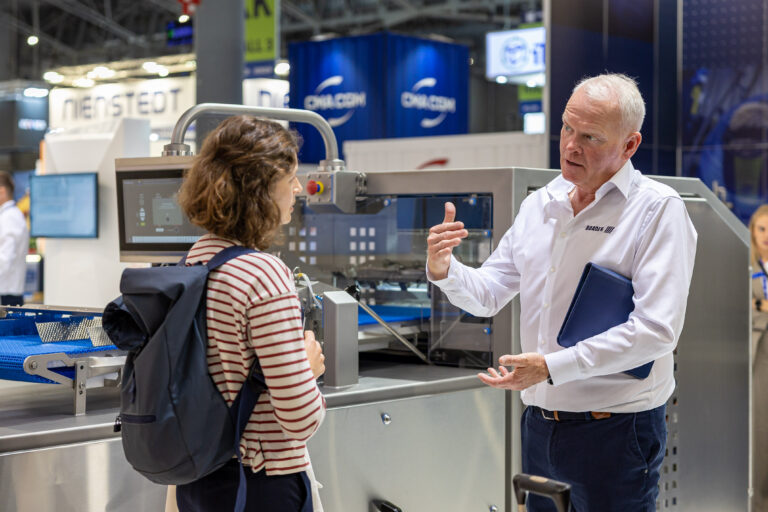
Meet face-to-face with the entire global seafood supply chain and processing technology sector over the course of three days, including:
The Global Seafood Marketplace features a robust Conference Program of more than 30 educational sessions led by some of the seafood industry’s leading experts.
Maximize your experience onsite by registering with a Conference Pass and unlocking insights you won’t find anywhere else in the world.
Take a look at some of the sessions from the 2026 Conference Program that are most relevant to YOU:
The recent Indonesian shrimp radiation occurrence is a good example of how the international seafood supply chain can affect the whole world. Whether the product is fish, shellfish, caviar, or octopus, the legal, regulatory, and compliance requirements for the companies responsible for aquaculture farming, catching, cleaning, sanitizing, cold chain transportation, and declaration to customs authorities at the country of importation are critical and complex. Knowing, understanding, and complying with the set of requirements for the international supply chain, especially for seafood, is a challenge for the marketplace. There are numerous, significant changes in laws, regulations, policies, and procedures that directly affect those companies involved in the international supply chain. Personnel from companies that are aware of these new changes will have an economic advantage, and avoid business and legal mishaps.
In Morocco, approximately 800,000 tons of small pelagics are processed annually in canning factories. During filleting and peeling, cooked by-products – mainly skin, bones, and flesh – can account for up to 20 percent of the processed fish. Currently, these residues are often combined with raw by-products from other operations such as heading, evisceration, and gutting, and are primarily used for animal feed.
This study aims to valorize sardine (Sardina pilchardus) filleting by-products by converting them into fish flour suitable for human consumption. The resulting flour exhibits exceptional nutritional qualities, being rich in proteins (55–57 percent), essential amino acids, omega-3 fatty acids (EPA and DHA), vitamins, and minerals. It has significant potential for the development of functional foods. For example, incorporating this flour into pizza dough produced a formulation that was well received by consumers. [Read More…]
With over 100 years of experience, BAADER has redefined the technological environment of processing equipment over and over again. Join us on an excursion into the future of seafood processing for various markets and species. We will look into latest developments and how they are matching diverse market demands.
Yes. Seafood Processing Global brings together global suppliers of seafood processing equipment, technology and services and puts them in one location so you can be compare the latest products and innovations side-by-side.
Accomplish in just three days what could otherwise take you a year.
Primary processing equipment (scaling, gutting, filleting), secondary/value-added processing lines (smoking, breading, packaging) and preservation technology (blast freezers, IQF tunnels, plate freezers), plus cold-chain, ERP and traceability solutions.
It’s worth considering. Equipment purchases are rarely made by one person, generally involving technical evaluators, procurement and finance and executive sign-off. Bringing that group together can speed up your next investment decision.
